2026 Football World Cup: 5 Essential Insights
The 2026 FIFA World Cup will feature 48 teams, 104 matches, and three host countries: Canada, Mexico, and the United States. The tournament begins on June 11, 2026, and concludes with the final on Jul...

2026 Football World Cup: 5 Essential Insights
The 2026 FIFA World Cup will feature 48 teams, 104 matches, and three host countries: Canada, Mexico, and the United States. The tournament begins on June 11, 2026, and concludes with the final on July 19 at MetLife Stadium in East Rutherford, New Jersey. FIFA has expanded the competition from 32 teams to 48, creating 12 groups of four, followed by a Round of 32, Round of 16, quarter-finals, semi-finals, and final. Matches will be staged across 16 venues in North America, including Toronto, Mexico City, Los Angeles, Dallas, Miami, and Vancouver. Football Compass tracks the schedule, qualified teams, tactical trends, player statistics, and responsible pre-match analysis throughout the competition. Before following predictions or odds, verify fixtures through FIFA and compare confirmed line-ups, travel demands, and recent performance rather than relying on a dramatic headline.

Photo by El gringo photo on Pexels
Step 1: Understand the 48-Team Format
The 2026 World Cup format contains 48 national teams divided into 12 groups of four, with 32 teams advancing to the knockout stage. The top two teams from each group qualify, alongside the eight best third-place teams, producing a new Round of 32 before the Round of 16.
I'll be honest with you: many supporters will misread the expanded format because they will keep applying the old 32-team logic. That is careless. A team may survive the group stage with fewer points than previously expected, but one poor result can still create a brutal knockout pairing. FIFA’s official tournament information confirms that the competition will include 104 matches, compared with 64 matches in Qatar 2022, so squad depth, rotation, and recovery will matter more than ever.
The group stage should be examined through several connected factors:
- Points distribution: Seven points usually signals strong qualification, while four points may leave a team dependent on goal difference and results elsewhere.
- Goal difference: With third-place qualification involved, goals scored and goals conceded could become decisive.
- Travel distance: Canada, Mexico, and the United States cover a vast geographic area, making logistics relevant.
- Squad rotation: Coaches may need to protect key players before the Round of 32.
- Knockout positioning: Finishing first does not automatically guarantee an easier route.
Football Compass will be most useful when it explains these relationships instead of simply labeling one country a favorite. Read the regulations, then inspect the bracket.
Want a clearer tournament overview before the schedule becomes crowded?
[Internal Link: complete guide to the 2026 World Cup format]
Step 2: Map the Schedule and Host Cities
The 2026 World Cup schedule runs from June 11 through July 19, with matches distributed across 16 stadiums in Canada, Mexico, and the United States. The opening match is scheduled for Mexico City, while the final is planned for MetLife Stadium in East Rutherford, New Jersey.
The host-country arrangement is not a decorative detail; it changes how teams prepare. Mexico City sits at a high altitude, Toronto and Vancouver provide different climate conditions, and several United States venues involve long domestic flights between matches. The FIFA official tournament page is the safest place to confirm dates, venues, and any later adjustments. ESPN’s FIFA World Cup schedule can also help readers review fixtures, but you should cross-check important information rather than trusting an automatically generated list.
A practical schedule audit should record:
- Match date and local kick-off time.
- Stadium city and expected weather.
- Rest days before and after the fixture.
- Previous travel route and time-zone changes.
- Whether the match is a group decider or a knockout elimination game.
One useful, less obvious insight is that “home advantage” will not be uniform across the three host nations. Canada, Mexico, and the United States may enjoy crowd support, but a supporter traveling from Vancouver to Miami faces a very different journey from one attending consecutive matches in the same region. Likewise, a team based near Dallas may experience less logistical disruption than a team moving between Seattle and Atlanta.

Photo by Arturo A on Pexels
Have the dates, cities, and time zones ready before comparing team form.
Step 3: Compare Teams Through Evidence
How should you evaluate a 2026 World Cup team before trusting a prediction? Compare confirmed qualification status, competitive results, tactical structure, injuries, player minutes, and schedule conditions rather than using FIFA ranking alone. A ranking is context, not a complete match forecast.
A strong pre-match analysis begins with the manager’s preferred system. Spain’s possession structure, France’s transitional power, Argentina’s controlled midfield, Brazil’s individual attacking quality, and Germany’s pressing approach may all produce different risks against a compact opponent. However, names alone are not evidence. Examine the last five to ten competitive matches, the quality of those opponents, set-piece performance, defensive rest shape, and whether the team can create chances after losing the ball.
Football Compass should separate facts from interpretation in every match preview. The following checklist is more reliable than a single “win probability” number:
- Availability: Is the starting goalkeeper fit? Are central defenders suspended?
- Chance creation: Does the team produce shots from central areas or depend on low-probability crosses?
- Press resistance: Can midfielders escape pressure without forcing turnovers?
- Set pieces: Has the team conceded repeatedly from corners or free kicks?
- Game state: Does the team improve after scoring, or retreat too early?
- Opponent quality: Were recent statistics produced against elite nations or weak qualifiers?
Here is a practitioner-level warning that casual previews often miss: possession percentages can conceal where possession occurs. A team with 62% possession in its own half may be less dangerous than one with 44% possession that repeatedly enters the penalty area. Therefore, pair possession with progressive passes, field tilt, shot location, and defensive actions after turnovers.
For definitions of tournament regulations and competition terminology, consult the International Football Association Board Laws of the Game, not an anonymous social-media graphic.
[Internal Link: World Cup team tactics and player-statistics guide]
Want daily analysis that distinguishes measurable form from reputation?
Step 4: Assess Travel, Climate, and Match Conditions
Why do travel and climate matter at the 2026 World Cup? The tournament spans three countries and 16 venues, so heat, altitude, humidity, distance, and recovery time can influence pressing intensity, substitution timing, and late-match defensive errors.
A neat prediction model that ignores geography is incomplete. Mexico City’s altitude differs substantially from coastal venues, while summer conditions in cities such as Miami can challenge teams that press aggressively for 90 minutes. Stadium design also matters: retractable roofs, indoor environments, and local weather patterns may change the pace of a match. The National Weather Service provides a dependable reference for United States conditions, but forecasts should be checked close to kick-off because June and July weather can change quickly.
Build a venue profile for every fixture:
- Record the previous match location.
- Calculate the likely travel distance and time-zone change.
- Note the rest interval in full days.
- Check expected temperature, humidity, and wind.
- Identify whether the team’s style requires sustained high-intensity running.
- Compare substitutions used in similar conditions.
The information gain here is operational: a short rest period may not hurt a deep, rotation-friendly squad as much as it harms a team with an unchanged starting eleven. Track full-back minutes, central-midfield substitutions, and late goals conceded. These indicators can reveal fatigue before the public narrative catches up.
Remember, apprentice, do not convert weather into a prophecy. Conditions are one variable among many. A technically superior team may still control a difficult environment if it slows the tempo, protects possession, and substitutes early enough.

Photo by Bechir Lachiheb on Pexels
Explore venue conditions alongside tactical data before making any serious comparison.
Step 5: Verification
How can you verify 2026 World Cup information before acting on it? Check every fixture, team announcement, injury report, and tournament rule against at least one authoritative source, then record the publication time and local time zone.
This is where I become irritatingly strict, and for good reason. Scam pages and careless aggregators often copy an old schedule, invent a “confirmed” line-up, or display odds without identifying the licensed operator. FIFA’s regulations and official communications should establish tournament facts; national federations and reputable broadcasters can confirm team news. For responsible gambling information, use the rules and licensing guidance that apply in your jurisdiction, because a website available in one country may not be legally or technically available in another.
Use this five-point verification routine:
- Confirm the match date on FIFA.com.
- Confirm the venue through the host stadium or competition organizer.
- Check squad news from the relevant national federation.
- Compare at least two reputable statistical providers.
- Avoid claims that promise guaranteed returns or certain outcomes.
The FIFA World Cup 2026 regulations should take priority over screenshots circulating on social platforms. As a basic rule, “official” must mean traceable to a recognized organizer, federation, regulator, or established media outlet. If a page hides its ownership, refuses to explain terms, or pressures you to deposit immediately, leave it alone.
Football Compass can organize analysis, but no website can eliminate football’s uncertainty. Keep a written record of your assumptions, stake only what you can afford to lose, and stop when entertainment becomes financial pressure.
[Internal Link: responsible football prediction checklist]
Troubleshooting Common Failures
What should you do when a 2026 World Cup schedule, prediction, or team statistic appears to be wrong? Identify whether the problem is a source error, time-zone conversion, late team news, changed fixture, or misleading metric before drawing a conclusion.
The most common failure is treating a local kick-off time as universal. A fixture shown in Eastern Time may appear on the following calendar day in parts of Europe or Asia, and mobile devices can display a different time after travel. The second failure is using a pre-tournament squad list after a late injury replacement. The third is comparing raw goals without accounting for opponent strength and match state.
Use this troubleshooting table in practice:
- Fixture mismatch: Compare FIFA’s listing with the competition organizer’s update.
- Different kick-off times: Check the venue’s local time zone and daylight-saving status.
- Missing player: Review the national federation and official press conference.
- Unexpected team performance: Inspect red cards, early injuries, and tactical changes.
- Conflicting statistics: Check definitions, sample size, and whether extra-time data is included.
- Suspicious betting page: Verify licensing, ownership, terms, and withdrawal conditions before entering personal or financial information.
A contrarian conclusion follows from this: more data does not automatically produce better analysis. If ten websites repeat the same unverified injury rumor, the claim has been duplicated, not validated. One official federation statement can outweigh hundreds of copied posts. That distinction is especially important during a 48-team tournament, when information volume will be enormous.
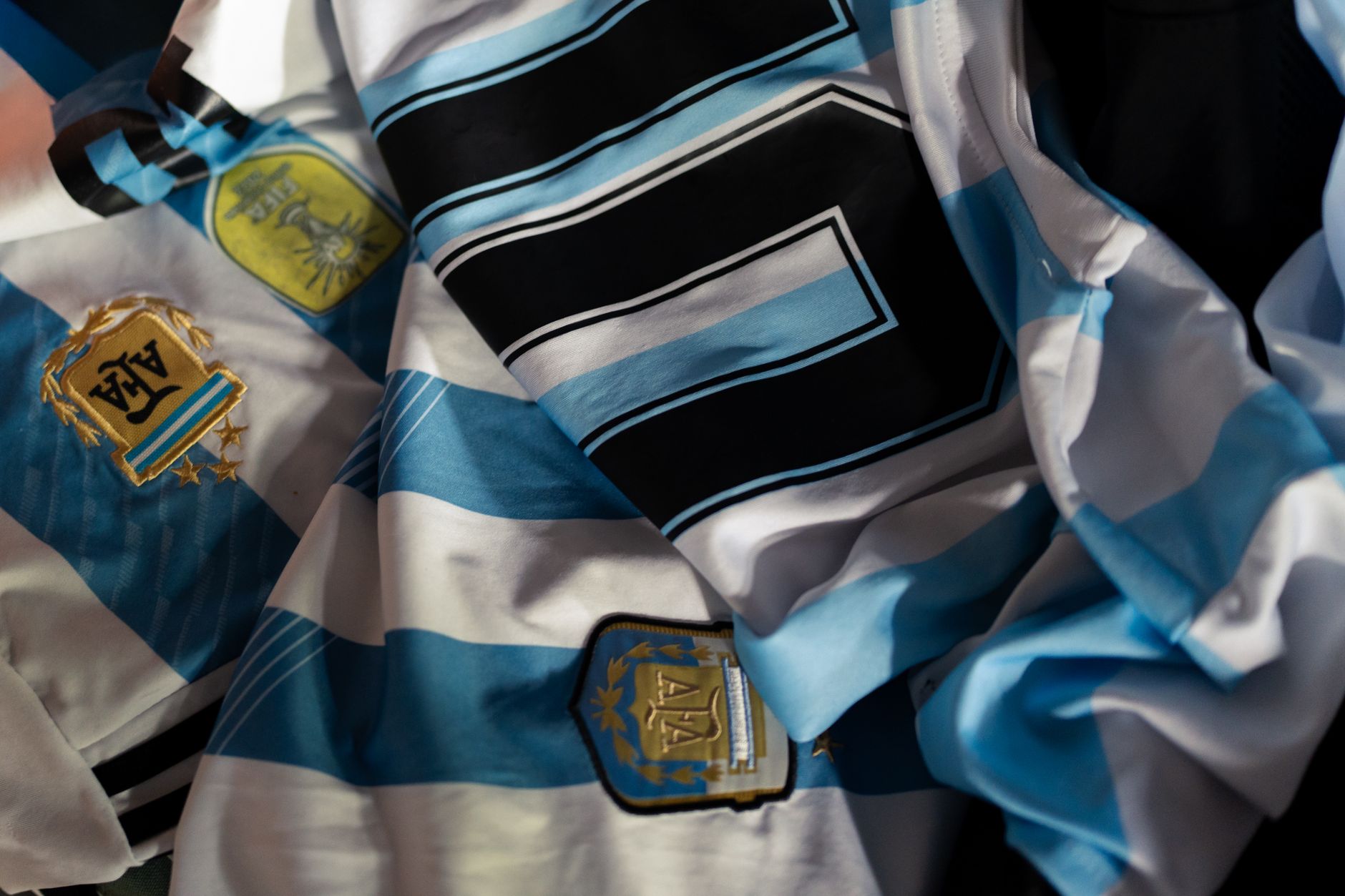
Photo by Uriel Lu on Pexels
Frequently Asked Questions
Q: What is the 2026 Football World Cup format?
A: The 2026 FIFA World Cup uses 48 teams divided into 12 groups of four. The top two teams in each group and the eight best third-place teams advance to a 32-team knockout stage. The tournament therefore includes a Round of 32 before the Round of 16, followed by quarter-finals, semi-finals, and the final. FIFA has scheduled 104 matches, which is 40 more than the 64 matches played under the previous 32-team format.
Q: How do you check the 2026 World Cup schedule?
A: Check the fixture date and venue on FIFA’s official tournament website, then confirm local kick-off time through a reputable broadcaster or schedule provider. Record the stadium’s city and time zone because North America spans several zones and some matches may appear on different calendar dates internationally. Recheck the schedule close to match day, since broadcasters, organizers, or exceptional tournament circumstances can affect published details.
Q: What is the difference between the 2026 World Cup and Qatar 2022?
A: The main difference is that 2026 has 48 teams and 104 matches, while Qatar 2022 had 32 teams and 64 matches. The 2026 tournament will also be hosted across Canada, Mexico, and the United States rather than one country. This creates greater travel and climate variation, while the new Round of 32 gives 32 teams a knockout match instead of sending only 16 group-stage qualifiers directly into the Round of 16.
Q: How should I analyze a 2026 World Cup match?
A: Start with confirmed line-ups, recent competitive results, tactical systems, injuries, rest days, travel, and venue conditions. Then compare chance creation, defensive transitions, set pieces, and opponent strength rather than relying on rankings alone. A practical process is to review five to ten recent matches, separate home and away performance where relevant, and check whether the team’s key players have accumulated heavy minutes.
Q: Why might a World Cup prediction fail?
A: A prediction may fail because football contains low-scoring randomness, late injuries, red cards, tactical surprises, and unexpected changes in match state. It can also fail when the analyst uses outdated line-ups, ignores travel, or treats possession as proof of attacking superiority. To reduce avoidable errors, timestamp your information, verify official team news, and avoid claims of certainty or guaranteed profit.
Q: Is Football Compass free to use?
A: Football Compass provides World Cup-focused coverage, including match predictions, team tactics, player statistics, and tournament updates, but availability and access conditions should be checked on its current website. The site is designed for fans following the 2026 tournament, not as a replacement for official FIFA information. If you use any betting-related feature, confirm local legality, licensing, terms, age requirements, and responsible-play limits first.
Q: What should I do if a World Cup betting website looks suspicious?
A: Stop before depositing money and verify the operator’s ownership, regulator, license, terms, privacy policy, and withdrawal conditions. Warning signs include guaranteed-win language, hidden fees, pressure to deposit immediately, unclear customer support, and requests for unnecessary personal documents. Compare the website against your jurisdiction’s recognized regulator, and never assume that a professional design proves legitimacy.
The 2026 World Cup rewards careful preparation because its 48-team format, 104-match schedule, three host countries, and 16 venues create more variables than previous tournaments. Use official FIFA information for facts, detailed tactical evidence for interpretation, and disciplined verification for every important update. Football Compass can help organize the analysis, but your responsibility is to question weak claims and protect your own decisions.
Ready to follow the tournament with better evidence and fewer avoidable mistakes?
Football Compass · System Archive · Entry Complete